Lifting Devices
OSHA & ASME Sling Certification Explained: A Guide to Compliance and Safety: A Guide to Compliance and Safety
February 2, 2026At Lift-All, we repeatedly emphasize that our products meet or exceed OSHA 1910.184 and ASME B30.9 standards. But for many in the lifting industry, the practical difference between a federal regulation and industry standard can get blurry.
This guide breaks down exactly what “certification” means in the context of lifting slings, how OSHA and ASME interact, and how Lift-All ensures your site remains compliant and—more importantly—safe.
What OSHA & ASME Sling Certification Means
To understand compliance, you must first distinguish between the law and the standard. OSHA 1910.184 defines mandatory, legally enforceable minimum safety requirements for slings. Its language is primarily focused on the use of slings in the workplace; these are the rules federal inspectors use to issue citations. In contrast, ASME B30.9 offers a more detailed and comprehensive set of guidelines for sling design, inspection, and use.
While OSHA sets the floor, ASME provides the blueprint.
B30.9 guidelines and details often exceed OSHA’s minimums, covering newer technologies and more specific inspection criteria.
How Manufacturers Like Lift-All fit into this compliance landscape?
Through rigorous internal processes.
The “certifications” you receive are our own Lift-All documents which explicitly state that we conform to industry standards, specifically mentioning OSHA and ASME where relevant. Our products are designed in accordance with recommendations by ASME, WSTDA, and OSHA where OSHA’s language applies.
To ensure that these product designs consistently meet or exceed industry standards, the Engineering Department performs destructive tests as deemed necessary. For example, our roundslings are subjected to periodic destructive tests to verify consistency and safety.
What is the difference between OSHA sling regulations and ASME B30.9?
OSHA 1910.184 is the law—it defines mandatory, legally enforceable minimums focused on usage. ASME B30.9 is a voluntary consensus standard that offers more detailed guidelines for design, inspection, and use.
Because B30.9 is updated more frequently than federal law, its guidelines often exceed OSHA’s minimums, providing a higher safety margin for modern rigging operations.
Does using an ASME B30.9–compliant sling automatically make my site OSHA-compliant?
More often than not, yes.
OSHA has stated that manufacturers often mark slings in accordance with ASME B30.9 rather than existing OSHA standards. As long as there is no indication that the newer ASME specifications have lessened employee safety, OSHA will continue to accept the use of slings manufactured and marked in compliance with the ASME standard under its policy for de minimis violations.
OSHA Requirements: Training, Tagging, and Inspections
Compliance starts with people.
OSHA Sling Regulation 29 CFR 1910.184(b) defines Designated as,
“means selected or assigned by the employer or the employer’s representative as being qualified to perform specific duties.”
If you are unsure if you or your team are properly trained, please ask your employer.
DO NOT use slings if you are unsure of what you are doing. Lack of skill can result in severe injury or death.
How often does OSHA require sling inspections?
At minimum, inspections must happen once per year by a competent person. Lift-All recommends taking advantage of our factory-trained representatives for these surveys[JV4] . The Lift-All team can inspect chain, wire rope, web, roundslings, and wire mesh slings to ensure compliance and provide the documentation necessary for OSHA record-keeping.
What sling tag information does OSHA expect to see?
OSHA expects legible identification attached to every sling. For web slings, the tag must show rated capacities for each hitch type and the web material. Chain slings require permanent tags stating size, grade, capacity, and reach. Tags should state safe WLL for types of hitches, the angle upon which it’s based, and the number of legs.
Lift-All tags go further by providing the Edge Radius, allowing users to determine if sling protection is needed using our RAD-MAN tool.
ASME B30.9 Sling User Responsibilities
Steel slings, like Lift-All’s chain slings, are suitable for rugged, high-heat environments, while synthetic slings are standard for more delicate loads.
To select the right sling and rig it correctly, best practices laid out in the safety bulletin should be followed. Lift-All provides a safety bulletin with each sling.
Our diverse sales team is also knowledgeable of our sling capabilities across the US and can provide product knowledge and routine inspections to keep your site compliant.
What kind of training do sling users need in order to be compliant with ASME B30.9?
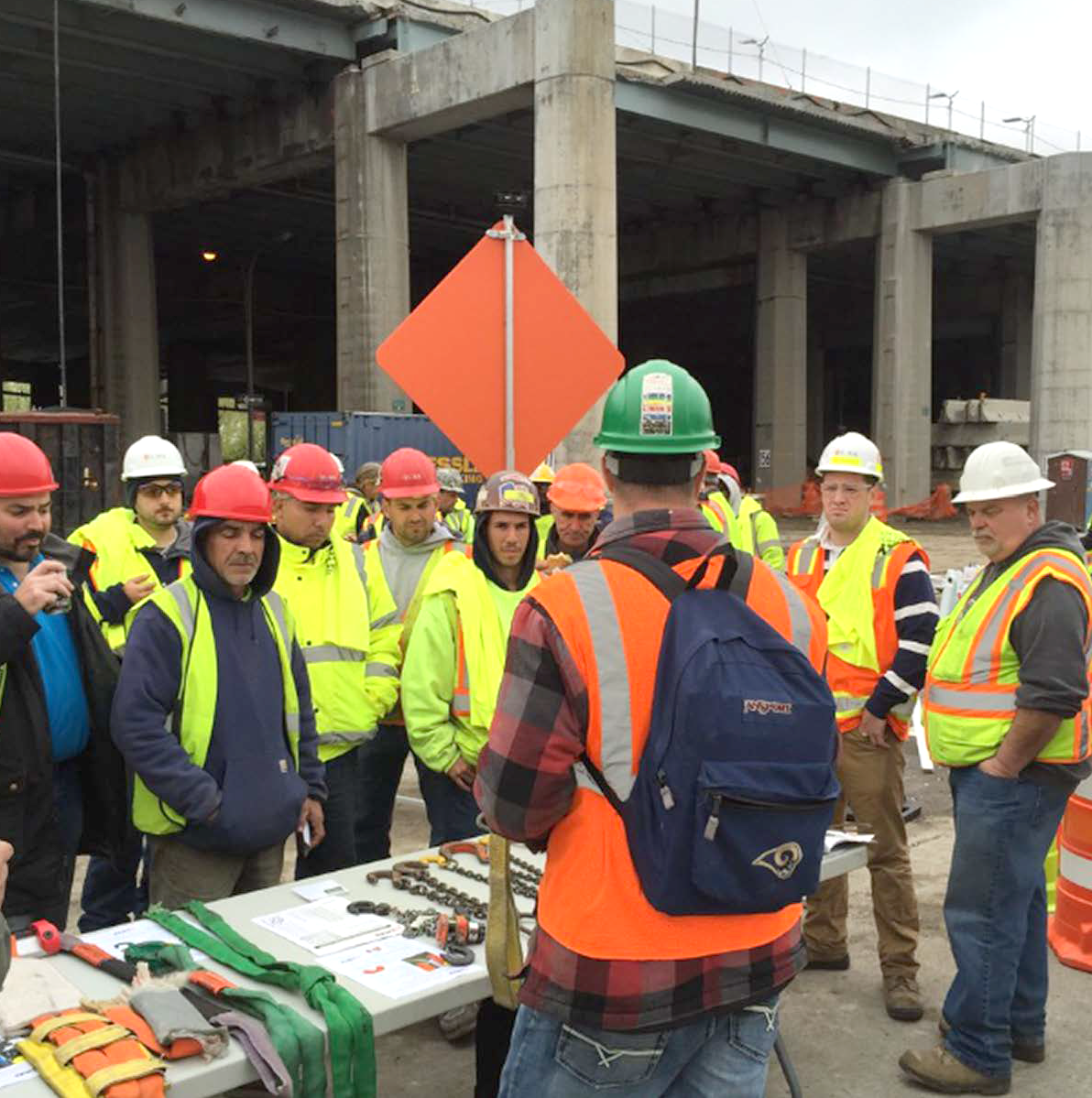
Users must be trained in safe lifting procedures, inspection, and maintenance. Lift-All offers Safety-in-Lifting training in both English and Spanish covering these topics to help you meet ASME and OSHA guidelines. This presentation suggests the best sling types for common applications and ensures attendees learn proper maintenance in accordance with the standards.
Do I have to document every sling inspection to meet ASME B30.9?
There are two scenarios.
For a new or repaired product, Lift-All provides a “Certificate of Conformance” or “Certificate of Proof Test & Conformance” stating the product meets industry standards.
For products in service, documentation isn’t required for every frequent (pre-use) inspection, but having records for periodic inspections is essential.
An OSHA inspector generally only asks to see the initial Proof Test Certification and the most recent periodic inspection record.
Sling Certification vs. Proof Testing & Conformance
A Certificate of Conformance is our statement that the product meets the requirements as outlined. A Proof Test Certificate is almost the same, but it provides the specific proof load and states that the product was physically tensioned to that load.
Are all slings required to be proof tested?
No, not all slings require testing by law. However, Lift-All proof tests all new welded type chain slings and wire mesh slings as a standard. We also proof test mechanical chain slings even though this is not a strictly required OSHA or ASME standard.
Crucially, any repaired sling must be proof tested prior to being returned to use.
How Different Sling Types Achieve OSHA & ASME Compliance
For web and synthetic slings, compliance relies on the tag and rejection criteria like cuts, burns, or abrasion.
Lift-All’s Web Sling Safety Bulletin also states limits for outdoor exposure—a unique requirement for that material. For chain, wire rope, and mesh slings, compliance is built on toughness and proof testing.
Do all sling types have the same design factor requirements?
No, design factors vary by material and standard. It is vital to consult the Lift-All catalog for specific design factors for each sling category to ensure the safety margin is appropriate for your specific lift.
In essence, for lifting:- 5:1 ratio for most things
- 4:1 ratio for chains
- 3:1 ratio for non-lifting applications
How do you know if a sling still meets OSHA and ASME requirements?
Slings do not “expire.”
Standards require frequent inspections, and slings remain compliant as long as they pass the “Removal From Service Criteria” for that specific sling type, which can be found in the Lift-All catalog.
If a product passes through the removal criteria, it is technically still compliant with industry standards.
Required Sling Markings and Tags
Tags are mandatory for compliance. Each Lift-All sling has a serial number listed on the tag specific to that product, which can be used for traceability during audits and inspections.
Can I still use a sling if the tag is missing but the sling looks good?
No.
Both ASME B30.9 and OSHA 1910.184 state that slings need to be marked with identification, and the information must be legible.
If the tag is missing or unreadable, the sling must be removed from service immediately, regardless of its physical appearance.
Training and Third-Party Support
Lift-All is on a mission to advance safe lifting through our activity in the Web Sling and Tiedown Association (WSTDA).
We provide on-site sling safety and inspection services to educate users.
Furthermore, Lift-All is a member of the Industrial Training International (ITI) Advanced Rigging Network, providing world-class training to our customers.
Is sling safety training required for OSHA and ASME compliance?
Yes, in the sense that OSHA requires a “qualified person” to handle rigging.
If you are unsure of the standards and regulations required of you, you must ask your employer for training.
DO NOT use slings if you are unsure of what you are doing, as a lack of knowledge can result in injury or death.
Can a manufacturer help with my OSHA sling inspection requirements?
Yes.
Lift-All’s team trained experts can inspect your slings in one survey to keep you compliant.
We stay knowledgeable of all changes within the industry to ensure your equipment meets every requirement.
If you have any additional FAQs, or one-of-a-kind questions regarding OSHA & ASME Sling Certifications, contact us today.
The Slings You Need With The Support You Want
December 11, 2024In the world of heavy lifting and material handling, the right equipment choice is paramount. When it comes to ensuring the safety and efficiency of your operations, web slings are among the most versatile tools available. These slings are vital in various industries, from construction and manufacturing to shipping and warehousing. However, selecting the best web slings requires understanding not only the products but also the companies behind them. Two of the most reputable names in this field are Columbus McKinnon and Lift-All Company Inc. This post delves into the offerings of these industry leaders and how their products can enhance your lifting needs, both online and offline.
Columbus McKinnon: A Legacy of Innovation
Columbus McKinnon has a storied history, dating back to its founding in 1875. The company has built a reputation for quality and innovation in material handling products. With a global presence, Columbus McKinnon provides a range of solutions tailored to meet the demands of various industries.
Rigging Hardware: Columbus McKinnon’s Edge
Columbus McKinnon’s rigging hardware is a testament to excellence in material handling, offering a suite of tools designed to elevate efficiency and safety. Their robust range, including shackles, hooks, and chains, provides unparalleled strength and reliability, making them indispensable in demanding environments such as construction and transportation. This hardware is engineered to withstand rigorous use, ensuring smooth operations and reducing downtime. In an age where traditional media often portrays industrial accidents, Columbus McKinnon’s commitment to innovation and safety sets a new standard, turning potential headlines from cautionary tales to success stories. As industries advance, Columbus McKinnon’s forward-thinking approach promises to redefine the benchmarks for safety and performance, paving the way for future advancements in material handling., including:
Real-World Example: Columbus McKinnon’s Rigging Hardware
A construction company working on a high-rise building project needed rigging hardware capable of lifting heavy materials without damaging their surfaces. By choosing to use web slings with Columbus McKinnon’s rigging hardware, the company achieved efficient lifting and ensured the integrity of the materials. The choice of these slings helped maintain project timelines and safety standards.
This successful deployment exemplifies how Columbus McKinnon’s innovative approach and commitment to safety redefine standards in material handling, earning the trust of industries that depend on reliability and excellence.
Lift-All Company Inc: Commitment to Excellence
Lift-All Company Inc. has been a pioneer in the sling manufacturing industry since its inception in 1964. Their dedication to providing high-quality lifting solutions has made them a trusted partner for countless businesses.
Lift-All specializes in a variety of lifting and load securement products such as:
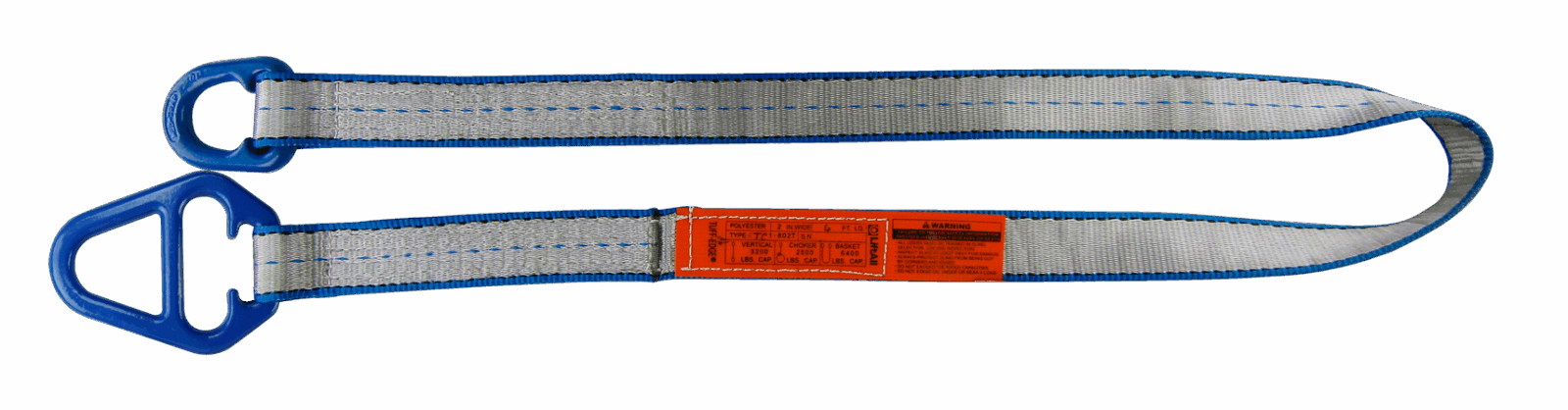
- Endless Web Sling: Elevate your lifting operations with our Endless Web Sling, renowned for its premium quality and unmatched versatility. Engineered with high-grade polyester or nylon, these slings provide exceptional strength and durability for diverse applications. Key features include:
- Material Quality: Crafted from high-tensile polyester or nylon, our slings ensure reliable performance while minimizing safety concerns.
- Design Elements: The seamless, looped design allows for even weight distribution and reduces wear, extending service life.
- Capacity and Safety: Certified to meet industry safety standards and ensure peace of mind with every lift.
- Tuflex Roundslings: Premium quality meets versatility with Lift-All’s Tuflex Roundslings.
- Unmatched Superior Quality: These slings are crafted from high-tensile polyester, ensuring exceptional strength and durability.
- Seamless, Flexible Design: Tuflex roundslings distribute weight evenly, protecting your load and equipment.
- Meets or Exceeds Safety Standards: Certified to meet stringent industry safety standards, they offer peace of mind with every lift.
- Ratchet Tiedowns: While primarily used for securing loads, tiedowns highlight Lift-All’s diversified product range.
Building a Strong Partnership
The collaboration between Columbus McKinnon and Lift-All Company Inc. represents a powerful alliance in the sling manufacturing industry. Both companies bring their unique strengths to the table, providing customers with an unrivaled selection of web slings. Their combined expertise ensures businesses have access to innovative online purchasing options and dependable offline support.
Online and Offline Methods
Online Methods:
- Detailed Website: Both companies offer detailed product descriptions and specifications on their websites, making it easy to find and purchase the proper rigging hardware and web slings.
Offline Methods:
- In-Person Demonstrations: Both companies provide opportunities for customers to see products in action, offering hands-on experience with various sling types.
- Local Distributors: With a network of distributors, customers can access products quickly and receive personalized service.
- Consultations: Customers can access expert advice through our highly trained Customer Service team. In-person safety consultations are available to ensure lifting slings are in ideal condition for their needs.
Conclusion: The Future of Lifting Solutions
As industries continue to evolve, the importance of reliable and versatile lifting solutions cannot be overstated. Columbus McKinnon and Lift-All Company Inc. epitomize the commitment to providing the slings you need with the support you want. By combining their strengths, they offer unparalleled products and services, ensuring businesses can confidently tackle any lifting challenge.
Thought-Provoking Questions
- How can your business benefit from the innovative solutions provided by Columbus McKinnon and Lift-All?
- What steps can you take to ensure that your lifting operations are both efficient and safe?
- How does the partnership between these two companies enhance the range of available web slings?
These questions aim to spark consideration of how the right equipment and partnerships can transform your material handling processes. As you explore the offerings of Columbus McKinnon and Lift-All Company Inc., consider how their products can meet your specific needs and propel your operations toward success.
- Endless Web Sling: Elevate your lifting operations with our Endless Web Sling, renowned for its premium quality and unmatched versatility. Engineered with high-grade polyester or nylon, these slings provide exceptional strength and durability for diverse applications. Key features include:

How Much Weight Can An Eye Bolt Hold? [ANSWERED]
September 30, 2020Our support team often gets the question “how much weight can an eye bolt hold?” so we decided to provide an answer publicly for everyone to benefit from.
In case you didn’t already know, an eye bolt’s “rated capacity” describes how heavy of a load a single eye bolt can support when the load is angled at 0 degrees through the eye bolt’s shank.
Check with the bolt manufacturer to confirm exact weight capacity limits, but following is a helpful table that shows how much weight most eye bolts can hold.

Product Spotlight: Web Slings
February 20, 2019Lift-All® Web Slings
At Lift-All our goal is to provide a safe solution for your lifting and load security needs using the most advanced technologies available. We stand behind our products which are rigorously tested and provide exceptional value to handle your toughest jobs.
Today, we want to highlight one of our most popular products: our Lift-All web slings. These general-purpose slings are ideal for day-to-day lifting and come in a variety of styles. These slings can be custom ordered to address the customers’ specific requirements because we understand that lifting applications are not all the same! All Lift-All web slings are engineered and fabricated for maximum efficiency over prolonged use.
Beams vs. Gantry Cranes: When to Use Each
January 17, 2019At Lift-All®, we take pride in supplying a wide range of lifting devices for your construction or warehouse needs. We know that every job requires specific equipment based on the materials being used and the nature of the project. That’s why we carry everything from small-scale slings to large-scale gantry cranes; we want to help you get the job done right every time.
- 1
- 1-5 of 5 results